How an Asset Management App Helps Businesses Track Assets in Real Time

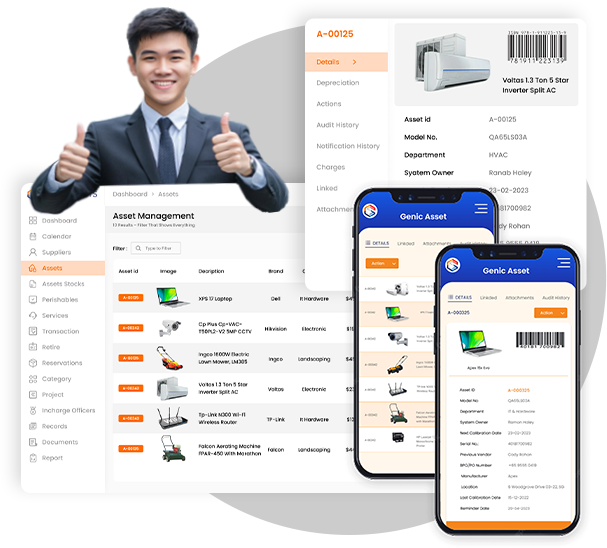
With an asset management application, businesses get a centralized tool that enables them to track and manage their physical and intangible assets in real time. Real-time tracking ensures minimal losses and fewer errors on the job while scheduling maintenance. This tool enables businesses that deal with large numbers of assets to automate processes that used to take place using spreadsheet programs.
When your company is running with scores, or even hundreds, of assets, you must be aware of this pain. There will be cases of lost equipment, failed maintenance and an update to some spreadsheet that nobody else uses but yourself. The solution would come in the form of an asset management application that allows everyone to see at once all the assets of the company.
But not every app is built the same. Before committing to a platform, business owners and IT managers need to understand which features actually matter — and why.
What Real-Time Asset Tracking Actually Means
Real-time tracking is not necessarily about getting coordinates every single second. For businesses, it usually means having information about where an item is, its current condition, who has it, and so on, without having to ask anyone.
This is typically achieved through a combination of:
Barcode or QR code scanning — staff scan assets on check-in, check-out, or transfer
RFID tagging — passive or active tags that update location when scanned by a reader
IoT sensor integration — for high-value assets requiring continuous condition monitoring
Mobile app updates — field teams log asset status directly from their devices
The right approach depends on your asset type, volume, and how much movement happens day to day. A construction company tracking heavy equipment has different needs than a school managing IT hardware.
Core Features to Evaluate Before Choosing an Asset Management App
This is where most purchase decisions fail. The company will analyze price points and interface designs without considering the operational functionality that decides the adoption of the software. This is what you need to consider.
1. Asset Lifecycle Management
An effective app will keep track of assets from acquisition to retirement – not only when they’re actually being used. The information on the date of purchase, warranty information, deprecation schedule, and future retirement should be readily available.
That’s because it is important for budgeting and compliance. Should an auditor ask how much your current book value of IT infrastructure is, you should know the answer immediately.
2. Maintenance Scheduling and Alerts
Reactive maintenance is costly. An effective asset management software application allows you to schedule maintenance activities and reminds you automatically well in advance when a service is required – not when the system breaks down.
Software applications which allow the scheduling of maintenance activities by assigning them to individual technicians and also allow you to keep records of past services can add to the life of equipment and machinery.
3. Role-Based Access and Audit Trails
Not all team members require the same amount of access. The IT managers must have the capability to provide permissions where the employees in the field would be able to update the status of assets but not delete any records or modify any financial information.
The audit trail is also important. Everything that was changed, by whom, at what time and from where must be logged automatically. This will protect the business from internal and external audits.
4. Custom Reporting and Dashboards
Data in its raw form is not knowledge. Your application needs to enable you to produce reports in the way that your business operates — by department, region, asset type, or cost center.
Your dashboard needs to highlight the key metrics: utilization rates, assets needing maintenance, depreciated value by category, and assets on loan but still outstanding. If you need an analyst to get the basic facts out of your application, something is wrong.
5. Mobile-First Design
If an asset management tool is restricted to operating only effectively on a desktop computer, then it is not something that the team in the field will use. This application must be able to scan barcodes, upload photos, and update statuses even without access to a stable internet connection.
This is especially relevant for construction, logistics, and health care.
6. Integration with Existing Systems
Your assets application does not exist alone. You need it to integrate with your ERP, accounting systems, procurement tools, and IT service management applications. Integration failure leaves you to enter data manually, negating the idea behind automation.
Before you sign any contract, check if there are APIs available along with connectors for your existing software.
Why Businesses in Singapore Are Prioritising Asset Visibility
In Singapore, companies are faced with a situation where the cost of operations is quite high, and the efficiency of assets directly impacts their margins. The Singapore Economic Development Board notes that manufacturing and technology industries have scaled up in size, and this has increased the need for structured asset management. Companies investing in digital asset management Singapore are realizing benefits from audit-readiness, downtime, and compliance with regulations.
Smaller businesses are also feeling the pressure. As headcounts stay lean, teams cannot afford to spend hours reconciling asset records manually. Automation is no longer a luxury — it is a competitive requirement.
Common Mistakes Businesses Make When Adopting an Asset App
Even with the right software, implementation failures are common. Here are the pitfalls that consistently derail rollouts:
Incomplete data migration: Moving only active assets and ignoring decommissioned or leased items creates blind spots from day one.
No staff training plan: Adoption rates drop sharply when users are not shown how the tool fits their specific workflow.
Choosing features over fit: A feature-heavy enterprise platform is a poor choice for a 50-person business that needs simplicity and speed.
Skipping a pilot phase: Rolling out across the entire organisation before testing with one department leads to costly fixes mid-deployment.
The most successful rollouts treat the first 90 days as a feedback loop — measuring adoption, identifying gaps, and adjusting configuration before scaling across teams.
A Practical Framework for Evaluating Your Options
Use this as a checklist during vendor demos. Any platform that cannot clearly answer these questions is one to remove from the shortlist.
Choosing the Right Platform Without Overcomplicating It
It is important to understand that the optimal asset management app for your company would be one that will actually be used by your people. This means that it has to be easy to adopt, configurable and scalable along with being able to lessen the burden of administration.
Identify what the most pressing problem is. If the problem is time-consuming and expensive maintenance monitoring, then begin there. If the problem is asset loss during audits, then begin with check-in/check-out procedures and audit trails. Go from there.
Genica Assets provides a methodology for asset visibility and asset life cycle management tailored to companies which do not require complex solutions but want to have clarity in their operations. If you are considering what to choose for your company, you should definitely consider whether a tailored-made solution can work for you.
Frequently Asked Questions
What is an asset management app and how does it work?
An asset management application is a software system that assists organisations in managing and tracking their assets during the whole period of their life cycle. This software accomplishes its task through the process of consolidating all information on assets such as their location, condition, owner, and maintenance status in one single place available from desktops or mobile phones using barcodes and QR/RFID labels.
Can small businesses benefit from using an asset management app?
Absolutely. It works well for small companies since the loss of assets and lack of maintenance become much more expensive for small scale operations. An easy-to-use app helps to cut down costs, get ready for auditing and manage more assets without adding new employees.
What features should I prioritise when choosing an asset management app?
The above areas need to be prioritized when selecting the tool, as they will not only lower risks involved but also ensure adoption. Adoption is the most crucial aspect that determines the return on your investment in the tool.
How does real-time asset tracking reduce costs for businesses?
Real-time tracking reduces time needed to search for assets, avoids double purchasing of assets, detects maintenance needs before equipment breaks down, and offers exact information for depreciation purposes. All these functions save money for your business both in terms of costs and administration expenses.
Is asset management software relevant for compliance and auditing in Singapore?
Yes. In Singapore, companies which are bound by regulations especially in finance, healthcare, and public procurement require an asset tracking record that is time stamped. An asset management system ensures that a company has everything that is needed for compliance purposes.
How long does it typically take to implement an asset management app?
The length of implementation is dependent on the size of the organization and the complexity of the data. An organization that is small or medium in size can implement in a period of two to four weeks. Phase implementation involves implementing the program in one department at a time.

.jpg)
Comments
Post a Comment